


Is 10% Niacinamide Too Much? Why More Is Not Always Better
A higher percentage can look more powerful on the label—but skincare is not a competition to collect the biggest number. Published studies have shown useful results at 2%, 4% and 5% niacinamide, which raises a smarter question: do you actually need 10%, or do you need a better-formulated routine?
If a 10% niacinamide serum makes your skin sting, flush, feel tight or develop tiny bumps, the answer may not be to “push through.” It may be to reduce concentration, stop ingredient stacking and choose one balanced niacinamide step.
10% niacinamide is not automatically unsafe or too strong for everyone, but it is more than many routines need. Clinical research has demonstrated visible benefits at concentrations between 2% and 5%, while safety testing found niacinamide generally well tolerated. A 10% formula may suit experienced users, but higher strength does not guarantee better results and can feel irritating when skin is sensitive, the barrier is stressed or niacinamide appears in several products at once.
The skincare market trained shoppers to read percentages like performance scores. If 5% sounds good, 10% must be twice as effective. If 10% exists, a lower number may feel weak, outdated or not worth buying.
But cosmetic concentration does not work like a volume button. Doubling an ingredient percentage does not automatically double the visible result. The complete formula matters: pH, supporting ingredients, texture, delivery system, amount applied, frequency, skin condition and everything else layered in the same routine.
This article is deliberately narrower than our complete guide to niacinamide benefits, uses and pairings. Here, the focus is one purchase decision: whether a 10% niacinamide serum is necessary—and when a balanced 5% formula may be the smarter long-term choice.
More niacinamide does not automatically mean more visible improvement.
The strongest concentration is not always the most effective concentration for your skin. The useful concentration is the one that delivers benefits without making the rest of your routine harder to tolerate.
Clinical trials have reported changes in facial sebum measures with a 2% niacinamide moisturizer.
Published studies have evaluated 4% and 5% formulas for concerns including acne appearance, tone and visible photoaging.
Some users tolerate it well, but the higher number alone does not prove that it is necessary or superior for everyone.
Your skin cannot read the marketing percentage. It can only respond to the formula you repeatedly apply.
Want niacinamide without beginning at 10%?
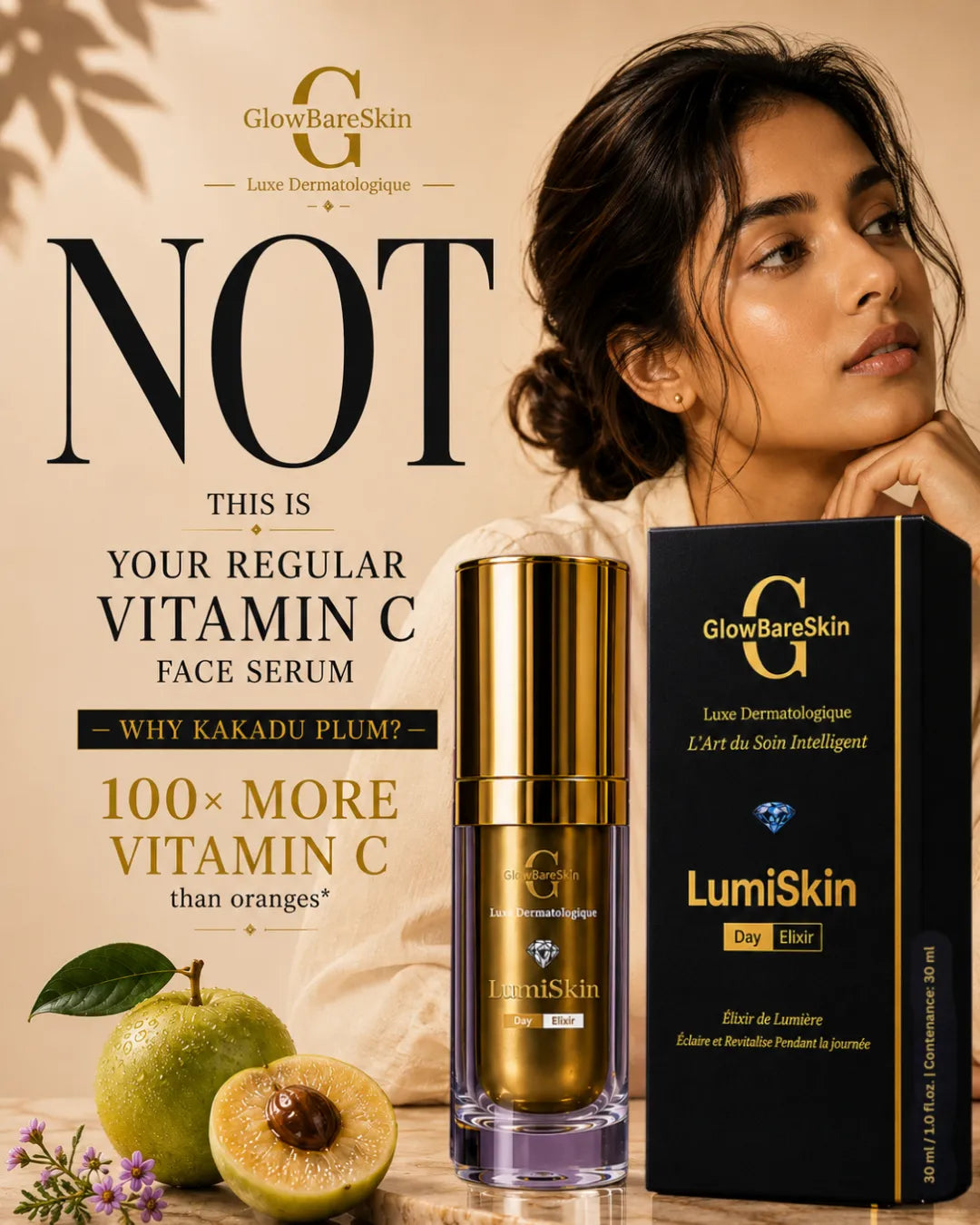
LumiSkin Day Elixir uses 5% niacinamide with Kakadu plum, hyaluronic acid and glycerine for a lightweight morning glow step.
Is 10% Niacinamide Too Much for Your Skin?
10% niacinamide may be comfortable for some people, especially those who already tolerate the ingredient and use a simple routine. It may be too much when skin is reactive, dry, barrier-damaged, new to active ingredients or already exposed to niacinamide through moisturizer, sunscreen, primer or makeup.
The most important distinction is between safety and necessity. A safety assessment reported no stinging in clinical testing at concentrations up to 10%, while repeated-use irritation testing cited good tolerance up to 5%. That supports niacinamide’s general reputation as a well-tolerated cosmetic ingredient—but it does not mean every person needs a 10% leave-on serum twice a day.
Personal tolerance can change with climate, cleansing habits, exfoliation, retinoid use and barrier condition. The same 10% serum that felt comfortable last year can sting after over-exfoliation or during a period of dryness.
Gentle cleanser, one niacinamide product, moisturizer and sunscreen.
Niacinamide layered with acids, retinoids and strong vitamin C.
Skin already feels tight, flaky, hot, itchy or easily irritated.
Serum, moisturizer, sunscreen and makeup all contain niacinamide.
What Niacinamide Percentages Have Clinical Evidence?
Published topical studies have reported benefits at 2%, 4% and 5% niacinamide. These studies do not prove that 10% never works; they show that a double-digit concentration is not the minimum required for meaningful cosmetic effects.
What lower percentages have already demonstrated
| Niacinamide Level | Research Context | Reported Finding | What It Means for Shoppers |
|---|---|---|---|
| 2% | Facial sebum studies in Japanese and Caucasian participants. | Changes were reported in sebum excretion or casual sebum measurements over several weeks. | Oil-balance support does not necessarily require a 10% serum. |
| 4% | Topical nicotinamide gel studied in inflammatory acne and a separate cosmetic wrinkle study. | Clinical improvements were reported in the studied endpoints. | A mid-range formula can be biologically and cosmetically active. |
| 5% | Double-blind, split-face studies of facial photoaging. | Improvements were reported in hyperpigmented spots, red blotchiness, texture, fine lines and sallowness after consistent use. | 5% has direct clinical precedent for daily leave-on skincare. |
| 10% | Used widely in commercial serums; safety testing supports general tolerability. | Individual experience varies by formula and routine. | It is an option—not evidence that lower percentages are ineffective. |
Studies differ in formula, population, duration and outcome measures. A percentage cannot be evaluated independently from the complete product.
Is 5% Niacinamide Enough?
Yes, 5% niacinamide can be enough for a daily routine focused on barrier support, more even-looking tone, visible radiance and texture refinement. A 12-week split-face study using 5% niacinamide reported improvements across several visible photoaging measures compared with the vehicle control.
“Enough” does not mean every concern disappears or every skin type responds identically. It means 5% is not a token concentration. It sits within a range that has been studied in leave-on facial products and can provide a rational balance between active positioning and daily usability.
For most shoppers, the more useful comparison is not 5% versus 10% on paper. It is:
10% Used Inconsistently
A stronger serum applied occasionally because it stings, pills or conflicts with the rest of the routine.
5% Used Consistently
A balanced formula that fits beneath moisturizer and sunscreen and remains comfortable enough for regular use.
Consistency can create more value than concentration.
A product cannot support long-term visible results when irritation makes you stop using it after five days.
Why More Niacinamide Is Not Always Better
Higher concentration can be useful when a formula is carefully designed and the user tolerates it. But percentage alone leaves out the factors that often decide whether a product succeeds.
Diminishing Practical Return
Once a useful concentration is reached, a higher number may add less visible value than marketing suggests.
More Irritation Potential
Reactive skin may experience burning, redness, itching, tightness or small bumps with higher-strength formulas.
Formula Matters More
Humectants, soothing ingredients, solvents, fragrance and texture can influence the final experience.
Routine Context Changes Everything
A 10% serum may be fine alone but overwhelming beside exfoliating acids, retinoids and harsh cleansing.
Hidden Duplication
Niacinamide may already appear in moisturizer, sunscreen, primer, foundation or cleanser.
The Goal Is Not Maximum Exposure
The goal is a stable routine that supports the concern without repeatedly stressing the barrier.
Do Two 5% Niacinamide Products Equal 10%?
No. Applying a 5% serum and a 5% moisturizer does not mathematically create one 10% product. Each percentage describes the concentration inside its own formula, while the amount applied, spreading, mixing on skin and product mass differ. However, layering multiple niacinamide products can increase total exposure and may feel excessive for sensitive skin.
5% + 5% is not a laboratory 10% serum on your face.
The formulas are applied in different amounts and form a mixed film. But your skin still experiences more ingredient-containing layers, which can matter when tolerance is low.
Its own formula and dose.
A different formula and dose.
Not chemically equivalent.
This is why checking ingredient overlap matters. A shopper may believe they use “only one active serum” while niacinamide is also present in their moisturizer, sunscreen and complexion product.
Seven Signs Your Niacinamide Routine May Be Too Much
Persistent Burning
A brief unfamiliar sensation is different from repeated burning that continues after application.
New Redness or Flushing
Skin looks hotter, redder or more reactive after adding the high-strength formula.
Tightness and Flaking
The routine leaves skin feeling stretched, dry or visibly rough despite moisturizer.
Tiny Uniform Bumps
Small bumps can reflect irritation, formula incompatibility or another ingredient in the product.
Products Suddenly Sting
Even a familiar cleanser or moisturizer begins to feel uncomfortable on compromised skin.
Makeup Sits Worse
Surface dryness and pilling become more visible after adding another concentrated layer.
No Extra Benefit
The higher percentage adds discomfort without improving the concern more than your previous routine.
What to Do
Pause the new product, simplify the routine and seek dermatology advice for persistent or severe reactions.
Do not assume every breakout is “purging.” Niacinamide does not exfoliate the way retinoids or hydroxy acids do. New burning, itching, swelling, rash or persistent bumps should be treated as a possible reaction—not proof that the product is working.
Who May Still Choose a 10% Niacinamide Serum?
A 10% formula may suit someone who already tolerates niacinamide, has a stable barrier, uses few overlapping actives and prefers a targeted serum. The decision should be based on skin response—not the assumption that 10% is automatically more effective.
When 5% or 10% may make more sense
| Routine Situation | 5% May Be Smarter When… | 10% May Be Considered When… |
|---|---|---|
| New to niacinamide | You want a measured starting point with established clinical precedent. | You have already patch tested and know your skin tolerates the formula. |
| Sensitive or reactive skin | Your barrier is easily stressed or you already use other actives. | Only with careful testing and a very simple supporting routine. |
| Daily glow and tone support | You want a serum that layers comfortably under moisturizer and SPF. | You prefer a higher-strength targeted product and tolerate it consistently. |
| Multiple niacinamide products | You want one clear hero step and less ingredient overlap. | Usually not the first choice until the routine has been audited. |
| Barrier-stressed skin | You prefer niacinamide in a moisturizer with ceramides and soothing support. | Delay until the barrier feels comfortable and stable. |
Niacinamide Serum or Moisturizer: Which Format Is Better?
A serum is useful when niacinamide is your targeted treatment step. A moisturizer is useful when you want niacinamide combined with hydration and barrier-support ingredients. Neither format is universally better; the smarter option is the one that fills a real gap without duplicating your routine.
 Choose the Serum Format
LumiSkin Day Elixir
Best for: dullness, uneven-looking tone, daytime hydration and shoppers replacing a harsh 10% serum with a balanced morning treatment.
Formula highlights: 5% niacinamide, 3% Kakadu plum extract, 2% Dermawhite, hyaluronic acid, sodium hyaluronate and 5% glycerine.
View the 5% Day Elixir Choose the Moisturizer Format
Radiance Revive Moisturizer
Best for: dehydration, barrier discomfort and shoppers who prefer niacinamide inside a cream rather than adding another dedicated serum.
Formula highlights: 5% niacinamide, 1% ceramides, hyaluronic acid, sodium hyaluronate, 1% oatmeal extract, bisabolol and glycerine.
View the 5% MoisturizerWhy GlowBareSkin’s 5% Niacinamide Options Are a Strong Choice
GlowBareSkin’s 5% options are strong choices for shoppers who want a clinically relevant niacinamide level without making percentage the entire formula. Both products combine niacinamide with ingredients selected for hydration, radiance or barrier comfort.
The difference is intentional routine function:
Day Elixir: Treat
A lightweight 5% niacinamide serum with Kakadu plum, Dermawhite, hyaluronic acid and glycerine. Use it after cleansing and before moisturizer and sunscreen.
Radiance Revive: Moisturize
A 5% niacinamide moisturizer with ceramides, oatmeal, bisabolol and humectants. Use it as the moisturizing step after serum—or as the primary niacinamide product in a simpler routine.
This creates two valid purchase paths rather than forcing every shopper into one high-strength serum:
- Choose Day Elixir when your main goal is a targeted morning serum for glow, hydration and even-looking tone.
- Choose Radiance Revive Moisturizer when your main goal is hydration and barrier comfort with niacinamide built into the cream step.
- Use both only when your skin tolerates the routine comfortably. Sensitive skin can begin with one niacinamide-led product and add the second later if needed.
- Finish every morning with sunscreen because tone-focused routines need daily UV protection.
“Luxury skincare shouldn’t overwhelm your routine. It should quietly improve it.” — Bathula Meghana, Founder of GlowBareSkin
How to Build a Niacinamide Routine Without Overdoing It
Option 1: The Targeted 5% Morning Serum Routine
Use a gentle cleanser and pat dry.
Apply 2–3 drops as the targeted 5% niacinamide step.
Use a compatible moisturizer if your skin needs it.
Finish every morning with SPF.
Option 2: The Barrier-Focused Niacinamide Moisturizer Routine
Keep cleansing gentle and non-stripping.
Use a non-niacinamide hydration step—or skip it.
Use the 5% niacinamide cream as the main active-moisturizer step.
Add sunscreen during the day.
Option 3: Using Both GlowBareSkin 5% Products
Using both does not automatically mean you have created a “10% routine,” but it does increase the number of niacinamide-containing layers. Begin with Day Elixir in the morning and Radiance Revive afterward only if your skin remains comfortable. Reactive skin can alternate formats, use the moisturizer at night or keep one product as the main niacinamide step.
Can you use the routine consistently without burning, redness or confusion?
If yes, the concentration may be appropriate. If no, the higher number is not delivering higher value.
Final Verdict: Is 10% Niacinamide Too Much?
10% niacinamide is not inherently too much for every person, but it is often unnecessary as a default starting point. Evidence supports useful cosmetic effects at lower concentrations, particularly 2% to 5%. A balanced 5% formula can be a smarter purchase when it fits the routine, supports consistent use and avoids unnecessary ingredient stacking.
The percentage arms race makes skincare feel scientific while removing the most important context. A 10% label cannot tell you whether the product will pill, sting, hydrate, layer under sunscreen or work alongside the rest of your routine.
GlowBareSkin’s 5% niacinamide choices give the ingredient a clear job instead:
LumiSkin Day Elixir is the targeted morning serum for glow, hydration and even-looking tone. Radiance Revive Moisturizer is the barrier-supporting cream for hydration and comfort.
That is the smarter question to ask before buying: not “Which bottle has the most niacinamide?” but “Which formula gives my routine what it is currently missing?”
More is not always better. Better chosen is better.
Science-Backed Skinimalism Beyond Percentage Marketing
GlowBareSkin is a founder-led skincare brand built around science-backed skinimalism: fewer products, clear routine roles and formulas designed for consistent real-life use.
The brand’s approach treats concentration as one part of formulation—not the entire reason to buy a product. Niacinamide is paired with hydration, antioxidant or barrier-support ingredients according to the job each product performs.
Frequently Asked Questions
Is 10% niacinamide too much for beginners?
It can be more than a beginner needs. Starting with a balanced 2% to 5% formula makes it easier to evaluate tolerance before considering a higher concentration.
Is 5% niacinamide effective?
Yes. Published split-face studies using 5% niacinamide reported improvements in several visible photoaging measures, including uneven pigmentation, texture and red blotchiness after consistent use.
Is 10% niacinamide better than 5%?
Not automatically. A higher concentration may suit some users, but it does not guarantee better results. Formula quality, tolerance and consistent use matter more than the number alone.
Can 10% niacinamide cause irritation?
Some people tolerate it well, while others experience burning, redness, itching, tightness or bumps. Irritation risk can increase when the barrier is stressed or multiple active products are layered.
Can niacinamide cause purging?
Niacinamide is not an exfoliating active that typically causes a classic purge. New persistent bumps, burning or rash may indicate irritation or a reaction to the complete formula.
Do two 5% niacinamide products equal 10%?
No. The concentrations belong to two different formulas applied in different amounts, so they do not add directly. However, multiple niacinamide layers can still feel excessive for sensitive skin.
Can I use a 5% niacinamide serum every day?
Many people can use a well-formulated 5% serum daily. Patch test first and begin gradually if your skin is reactive or new to active ingredients.
Should I choose niacinamide serum or moisturizer?
Choose a serum when you want a targeted treatment step. Choose a moisturizer when you want niacinamide combined with hydration and barrier support. Avoid adding both automatically if one already meets your needs.
Can I use LumiSkin Day Elixir with Radiance Revive Moisturizer?
Yes, the products are designed to layer, but both contain 5% niacinamide. Start with one product if your skin is sensitive, then add the second only if your routine remains comfortable.
Where does LumiSkin Day Elixir fit in the routine?
Apply 2–3 drops after cleansing in the morning. Follow with moisturizer if needed and finish with sunscreen.
Can I use niacinamide with vitamin C or retinoids?
Niacinamide can fit into routines containing vitamin C or retinoids, but introduce products gradually. The total routine—not one pairing myth—usually determines whether irritation develops.
How long does niacinamide take to show results?
Hydration and comfort may feel different sooner, while visible tone and texture changes usually require consistent use over several weeks. Clinical studies commonly assessed results over 4 to 12 weeks.
Research and References
- Cosmetic Ingredient Review: Final report on the safety assessment of niacinamide and niacin.
- Draelos ZD, et al. The effect of 2% niacinamide on facial sebum production.
- Shalita AR, et al. Topical 4% nicotinamide compared with clindamycin gel in inflammatory acne vulgaris.
- Kawada A, et al. Evaluation of anti-wrinkle effects of a cosmetic containing 4% niacinamide.
- Bissett DL, et al. Niacinamide: a B vitamin that improves aging facial skin appearance.
- Bissett DL, et al. Topical 5% niacinamide and visible signs of aging facial skin.
- Tanno O, et al. Nicotinamide, ceramide synthesis and epidermal barrier function.
- Gehring W. Nicotinic acid/niacinamide and the skin.
- Tempark T, et al. Ceramide and niacinamide moisturizer used with topical anti-acne treatment.
About This Guide
This article provides cosmetic skincare education and purchase guidance. It does not diagnose or treat acne, rosacea, eczema, melasma, dermatitis, allergic reactions or other medical conditions. Product tolerance varies by formula and individual skin. Patch test new products, stop use if significant irritation occurs and consult a dermatologist for persistent burning, swelling, rash or worsening skin symptoms.


