
 India
India
Best Sunscreen for Oily Skin in India | Lightweight SPF 50
Best Sunscreen for Oily Skin in India: A Complete Guide
If you have oily skin, the best sunscreen for you is a lightweight, non-comedogenic, matte-finish formula with broad-spectrum SPF 50 and PA++++ protection. Heavy, cream-based sunscreens sit on top of oily skin, mix with sebum, and often lead to a greasy shine within an hour. India's heat, humidity, and strong UV index make this worse, since sweat and oil break down sunscreen faster than in cooler climates. The fix isn't skipping sunscreen. It's choosing a gel or fluid texture that absorbs quickly, controls oil, and leaves no white cast. This guide explains what to look for, which ingredients help, and how to build a simple routine around daily SPF, so you can protect your skin without the greasy trade-off.
Why Does Oily Skin Need a Different Kind of Sunscreen?
Oily skin produces more sebum than normal or dry skin, especially in hot, humid weather. India's UV index regularly crosses 8 to 11 during peak summer months, which falls in the "very high" to "extreme" exposure category. When a heavy sunscreen mixes with this extra oil, it can feel sticky, clog pores, and slide off the face within a few hours. This isn't just uncomfortable. It means your skin is left with far less real protection than the SPF number on the bottle promises, since the product isn't staying put.
Shop lightweight formulas built for this exact problem in the GlowBareSkin skincare collection.
What Should You Look for in a Sunscreen for Oily Skin?
Not every SPF product is built for oily or acne-prone skin. When you're checking a label, look for these four things:
-
Lightweight, gel or fluid texture: Absorbs fast and doesn't leave a heavy film.
-
Non-comedogenic and oil-free: Formulated so it's less likely to clog pores.
-
Matte finish, no white cast: Blends into the skin instead of sitting on top.
-
Broad-spectrum SPF 50, PA++++: Covers both UVA rays (ageing) and UVB rays (burning).
For example, a sunscreen formulated with Kakadu Plum extract, one of the richest natural sources of vitamin C, is designed to support an even skin tone while staying lightweight enough for daily wear in humid weather.
Chemical vs Mineral Sunscreen: Which Works Better on Oily Skin?
Chemical sunscreens use ingredients like avobenzone or tinosorb, which absorb into the skin and tend to feel lighter, making them a common pick for oily and combination skin. Mineral sunscreens use zinc oxide or titanium dioxide, which sit on the skin's surface and can feel heavier, though they're often gentler for sensitive or breakout-prone skin. Many newer formulas now combine both approaches. This hybrid method aims to give you the light feel of a chemical sunscreen along with some of the calming benefits of mineral filters, without the thick, pasty texture older sunscreens were known for.
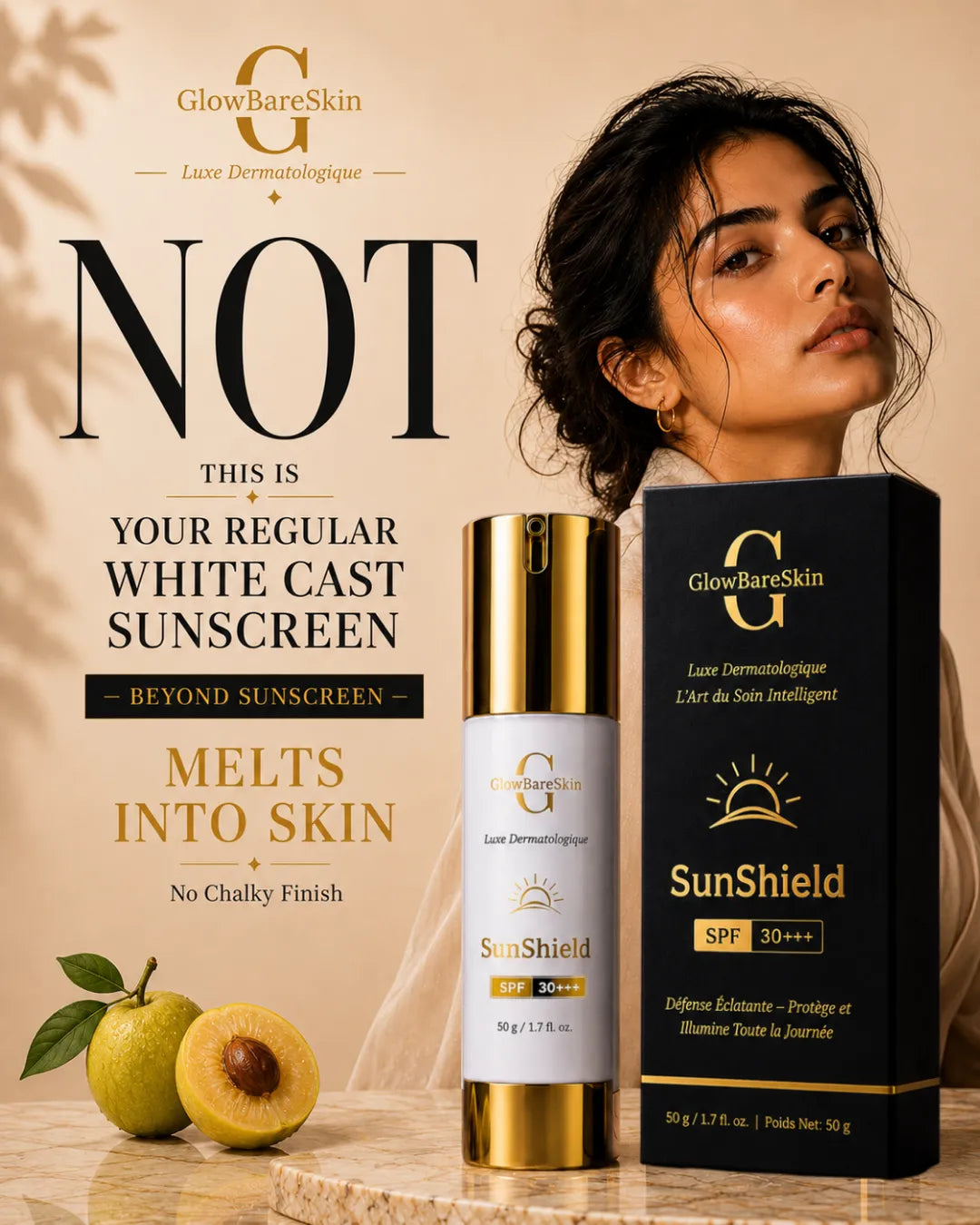
Try a hybrid, oil-free formula like the Kakadu Plum SPF 30+++ Sunscreen for face, made with no white cast.
Which Ingredients Actually Help Oily and Breakout-Prone Skin?
A good sunscreen for oily skin isn't just about SPF. The supporting ingredients matter too:
-
Niacinamide: May help support a more balanced, less shiny look throughout the day.
-
Silica: Often used in mattifying formulas to absorb excess surface oil.
-
Hyaluronic acid and glycerin: Lightweight humectants that support hydration without adding grease, since even oily skin can be dehydrated underneath.
Skin that's stripped by harsh cleansers often overproduces oil to compensate, which is why pairing sunscreen with a gentle, purifying cleanser matters just as much as the SPF itself.
What Mistakes Do People With Oily Skin Make With Sunscreen?
Three mistakes come up again and again. First, people apply too little product, when the standard rule is about a quarter teaspoon (roughly 1.25 ml) for the face alone. Second, many skip reapplication entirely, even though sunscreen protection breaks down after two to three hours of sun exposure, sweat, or oil buildup. Third, some people avoid sunscreen altogether because of past bad experiences with heavy, greasy formulas, which leaves skin unprotected from tanning, pigmentation, and early fine lines over time.
How Is GlowBareSkin's Sunscreen Formulated for Oily Skin in India?
GlowBareSkin designed its sunscreen range specifically around Indian weather conditions, meaning high humidity, intense sun, and skin that needs oil control without dryness. The formula is built around Kakadu Plum, paired with a gel-fluid base that's designed to sit comfortably under makeup and resist the midday shine that oily skin is prone to. It's formulated to support an even, radiant tone while staying non-greasy through long working hours or daily commutes.
For a complete routine, the GlowBareSkin Éclat 5-Step Skincare Set combines cleanser, moisturizer, and SPF in one system.
How Should You Apply Sunscreen If You Have Oily Skin?
Apply sunscreen as the last step of your morning routine, after moisturizer and before makeup. Use about a quarter teaspoon for your face and neck, and give it 15 to 20 minutes to settle before stepping outside. Reapply every two to three hours if you're outdoors for long periods, using a compact or SPF-infused powder if reapplying over makeup feels impractical. Consistency matters more than the exact product you choose. A lower-SPF sunscreen applied properly and reapplied on time outperforms a high-SPF one applied once and forgotten.
How Can You Build a Simple Skincare Routine Around Sunscreen?
Sunscreen works best as part of a routine, not as a standalone fix. A basic order looks like this: cleanse, treat (serum or moisturizer), then apply SPF. Starting with a cleanser suited to oily skin helps remove excess sebum without stripping the skin barrier, which keeps sunscreen from mixing with leftover oil later in the day. The Kakadu Plum Face Cleanser for Dull & Oily Skin is designed to support this first step, setting a clean, balanced base before sunscreen goes on.
Build your full routine with GlowBareSkin and make daily SPF a habit that actually sticks.
Frequently Asked Questions
1. What SPF is best for oily skin in India?
SPF 50 with PA++++ is generally recommended, since India's UV index is high for most of the year. Look for a gel or fluid texture to avoid the heavy feel of cream-based sunscreens.
2. Does sunscreen make oily skin worse?
Not when it's formulated correctly. Non-comedogenic, oil-free sunscreens are designed to sit lightly on the skin. Heavier, cream-based formulas usually cause extra shine, not sunscreen itself.
3. Chemical or mineral sunscreen: which is better for oily, acne-prone skin?
Chemical sunscreens tend to feel lighter and are popular for oily skin. Mineral sunscreens can feel heavier but may suit sensitive or breakout-prone skin better. Hybrid formulas aim to combine the benefits of both.
4. How often should I reapply sunscreen if I have oily skin?
Every two to three hours if you're outdoors, or sooner if you're sweating heavily. Indoors with minimal window exposure, one application in the morning is usually enough.
5. Can I skip moisturizer if my sunscreen already feels hydrating?
It's best not to. Sunscreen and moisturizer serve different purposes. Even oily skin needs a lightweight moisturizer underneath to support a healthy skin barrier.
Featured by India's Leading Publications


